Your First Chemo Cycle: What Actually Happens
By ICTC
A first chemotherapy cycle usually involves more than receiving an anticancer drug. Before treatment begins, the oncology team confirms that the planned regimen, dose and supportive medicines remain appropriate, reviews recent investigations and establishes safe intravenous access. During treatment, nurses monitor for immediate reactions. The days afterwards are equally important because several toxicities emerge only after the patient has gone home.
The exact process varies considerably. Chemotherapy is not a single treatment. A short intravenous injection, a multi-hour combination regimen and a continuous infusion through a portable pump can produce very different first-cycle experiences. The cancer being treated, treatment intent, drugs used, dose, organ function and the patient's general condition all influence what happens.
How to Prepare Before Your First Session?
Preparation begins before entering the chemotherapy day-care unit. The first cycle is usually based on a treatment plan specifying the drugs, doses, route of administration, sequence and interval between cycles.
Recommended Medical Tests
A complete blood count is commonly reviewed before chemotherapy because many cytotoxic drugs suppress bone marrow activity. The oncology team may look specifically at haemoglobin, platelet count and the absolute neutrophil count, or ANC, which estimates the number of circulating neutrophils available to help fight infection.
Kidney and liver function may also be checked. This matters because certain chemotherapy drugs or their metabolites are eliminated through these organs. Significant impairment can alter drug exposure and, depending on the regimen, may require a dose modification, additional monitoring or treatment delay.
Not every patient requires the same investigations. Depending on the drugs being used and the patient's medical history, assessment may also involve electrolytes, cardiac evaluation or other treatment-specific tests.
Blood results are not interpreted in isolation. The oncologist also considers recent infection, previous treatments, performance status, existing medical conditions and whether the patient has developed new symptoms since the treatment plan was made.
What to Eat or Avoid?
Unless the oncology team has provided regimen-specific fasting instructions, patients are generally better served by arriving adequately nourished rather than deliberately skipping meals. A light, familiar meal may be easier to tolerate than a very heavy one, particularly if nausea is a concern.
There is no universal "chemotherapy diet". Dietary advice may need to change if a patient has diabetes, kidney disease, swallowing difficulties, gastrointestinal obstruction or another condition affecting nutrition.
Supplements and herbal preparations deserve particular attention. "Natural" does not automatically mean pharmacologically inactive. Some products can interact with medicines or affect drug-metabolising pathways. Patients should tell their oncology team about vitamins, supplements and complementary products rather than starting or stopping them independently.
Essentials to Carry to the Centre
Practical preparation can make a long infusion day easier. Useful items include:
Current prescriptions and a list of medicines, including supplements
Relevant investigation reports if they are not already available electronically
Identification and hospital documents
Water and permitted light snacks
Comfortable clothing that allows easy access to the arm, PICC line or implanted port
Something to read, watch or listen to during a longer infusion
Contact details for the oncology team and the person accompanying you
For the first cycle, having a family member or caregiver available can also be useful, particularly because the patient is learning a new treatment routine and may receive medicines that cause drowsiness.
What to Expect During the Session?
Chemotherapy usually does not begin the moment a patient arrives. Registration, clinical review, laboratory verification, drug preparation and premedication can all occur before the anticancer drug itself is administered.
Premedications vary by regimen. They may include medicines intended to reduce nausea and vomiting, hypersensitivity reactions or other predictable treatment effects.
Accessing a PICC or Chemo Port
Intravenous chemotherapy needs reliable vascular access. Some regimens can be administered through a peripheral cannula placed into a vein in the hand or arm. Patients receiving repeated treatment, prolonged infusions or drugs for which peripheral administration is unsuitable may have a peripherally inserted central catheter (PICC) or an implanted venous port.
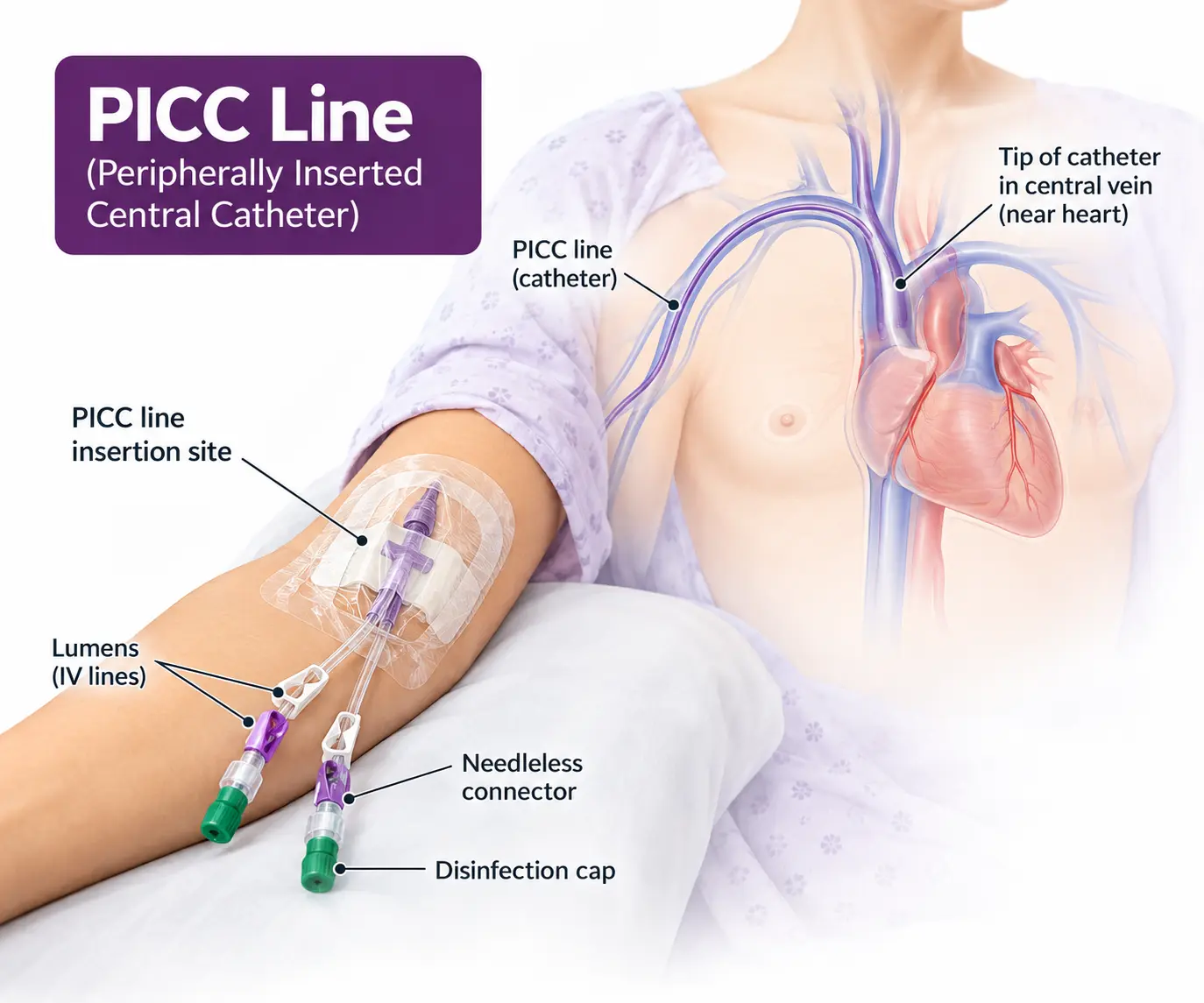
A PICC is a catheter inserted through a peripheral vein with its tip positioned in a large central vein. An implanted port sits beneath the skin and connects to a catheter in the central venous circulation. During treatment, the port is accessed using a specialised needle.
Central access can reduce repeated peripheral needle placement, but it also requires appropriate care because catheter-related infection, blockage and thrombosis are recognised complications.
Monitoring Vitals and Reactions
Before and during treatment, nurses may monitor blood pressure, pulse, temperature, oxygen saturation and symptoms according to the regimen and institutional protocol.
This monitoring is particularly relevant because some intravenous anticancer drugs can cause acute infusion or hypersensitivity reactions. Symptoms can include flushing, itching, rash, breathlessness, chest discomfort, dizziness or changes in blood pressure.
An infusion reaction is different from many delayed chemotherapy side effects. Nausea, fatigue or reduced blood counts may emerge hours or days later, whereas an acute reaction can occur while a drug is being administered.
Patients should report new symptoms immediately rather than waiting to see whether they disappear. The clinical team can then assess the reaction and determine whether the infusion needs to be interrupted or managed according to the treatment protocol.
Duration and Observation Period
There is no standard length for a chemotherapy session.
Some drugs can be administered relatively quickly. Others require slower infusion, multiple drugs given sequentially, hydration before or after treatment, or prolonged administration. Certain regimens continue outside the chemotherapy unit using a portable infusion pump.
The first session can also take longer because additional checks, counselling and observation may be required.
Once treatment is complete, the patient may be observed before discharge. The team should explain prescribed supportive medicines, the next treatment date, expected side effects and the symptoms that require medical attention.
After-Chemo Care at Home
Leaving the chemotherapy unit does not mean the treatment's biological effects are over. Many cytotoxic drugs continue affecting both cancer cells and susceptible normal tissues after administration.
Managing Nausea and Fatigue
Modern antiemetic regimens have improved control of chemotherapy-induced nausea and vomiting, but risk varies substantially between drugs.
Nausea may occur soon after treatment or appear later. Patients should follow their prescribed antiemetic schedule and contact the oncology team if vomiting prevents them from keeping down fluids or medicines.
Fatigue is also common but has multiple possible causes. Chemotherapy itself can contribute, but anaemia, dehydration, poor nutrition, sleep disruption, infection and the cancer can also produce fatigue. A marked or rapidly worsening change therefore deserves clinical attention rather than automatically being attributed to chemotherapy.
Hydration and Diet Tips
Fluid intake is important after many regimens, particularly when vomiting or diarrhoea increases fluid loss. However, the appropriate amount can differ in people with kidney or heart disease, so individual instructions take priority.
Food intake may need to become more flexible during the days after treatment. Smaller meals can be easier when appetite is reduced. Adequate protein and overall energy intake matter more than following a restrictive "anticancer" diet.
Changes in taste, mouth soreness, constipation or diarrhoea can require more specific nutritional adjustments.
Warning Signs to Watch For
One of the most important first-cycle lessons is knowing the difference between an expected treatment effect and a possible complication.
Many cytotoxic agents suppress rapidly dividing precursor cells in the bone marrow. As neutrophil production falls, some patients develop neutropenia. If fever develops in the setting of clinically significant neutropenia, febrile neutropenia can represent an oncological emergency because the body's ability to contain infection may be impaired.
Patients should know their treatment centre's specific instructions for fever and emergency contact. Other symptoms that may require prompt assessment include persistent vomiting, severe diarrhoea, new breathlessness, unusual bleeding, confusion, severe weakness, reduced urine output or signs of infection around a PICC or port.
Side effects after the first cycle also provide clinically useful information. Before the next cycle, the oncology team reviews how the patient tolerated treatment alongside blood counts, organ function and other regimen-specific parameters. Significant toxicity does not automatically mean chemotherapy has failed. Depending on the clinical situation, management can include supportive treatment, a treatment delay or dose modification.
Your first chemo cycle is therefore both the beginning of treatment and the first opportunity to understand how your body responds to a specific regimen. Before leaving the centre, make sure you know which medicines to take at home, which symptoms are expected, whom to contact after hours and when your next blood tests and oncology review are scheduled.