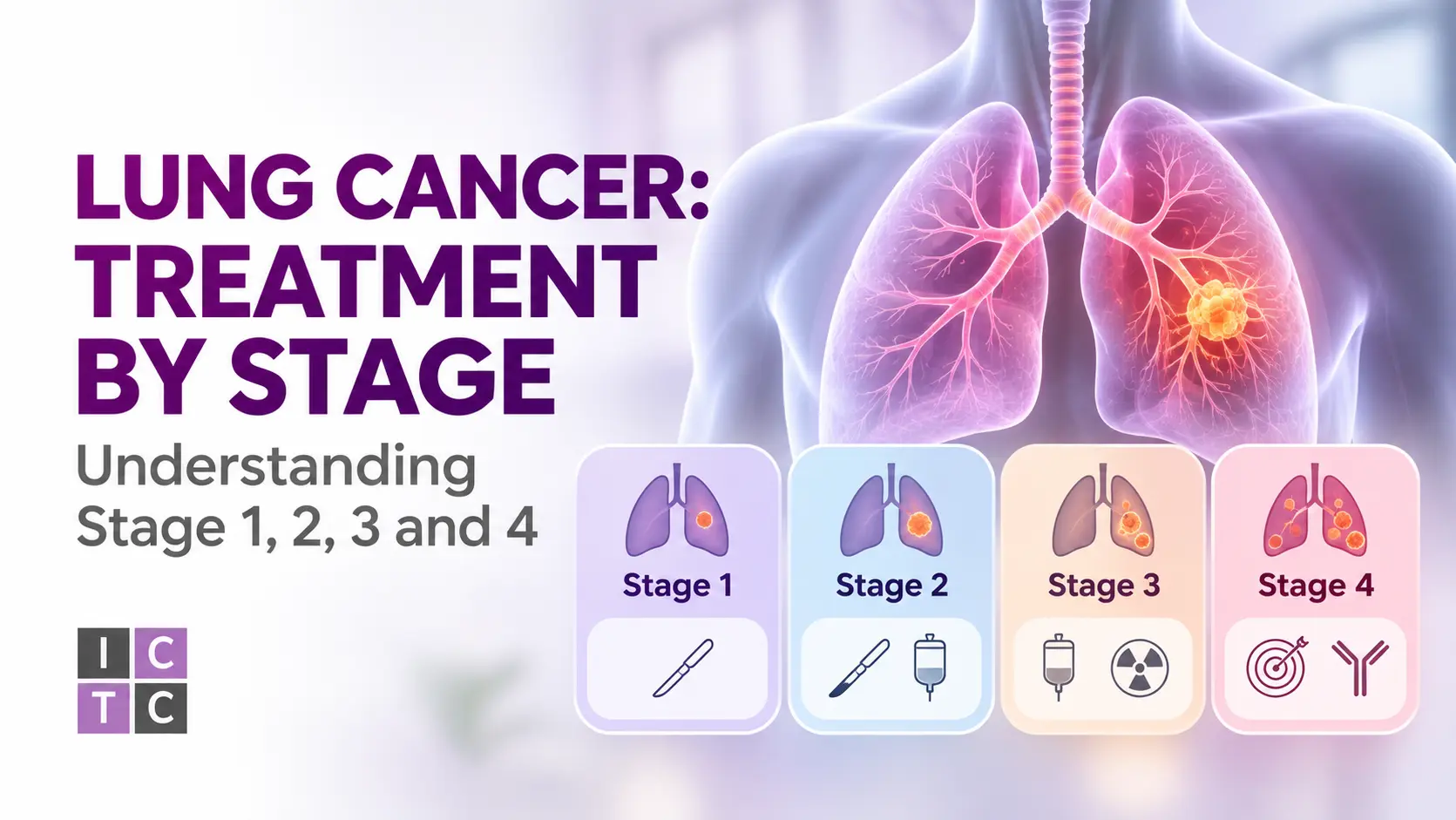
Lung Cancer Treatment by Stage: Stage 1, 2, 3 and 4
By Dr Amit Ghanekar
Understanding Lung Cancer and Its Treatment
Hearing the words "lung cancer" can be overwhelming for patients and their families. Naturally, one of the first questions that comes to mind is: What happens next, and what are the treatment options?
Understanding the disease is a good place to start.
Lung cancer develops when abnormal cells in the lungs begin to grow uncontrollably and form a tumour. As these cells continue to grow, they can damage nearby lung tissue and may spread to other parts of the body.
According to the World Health Organization (WHO) , approximately 2.5 million new cases of lung cancer were reported worldwide in 2022, making it the most commonly diagnosed cancer globally.
Smoking is the leading risk factor for lung cancer. However, it is important to understand that people who have never smoked can also develop the disease. Exposure to second-hand smoke, air pollution, radon gas and certain harmful substances at work can also increase the risk.
The good news is that lung cancer can be treated in different ways. Depending on the type and stage of cancer, doctors may recommend surgery, chemotherapy, radiation therapy, immunotherapy or targeted therapy. Some patients may benefit from a combination of these treatments.
So, how does treatment change as lung cancer progresses? Let's understand the different stages and the treatment approaches commonly considered at each stage.
What are the different Stages of Lung Cancer?
Cancer staging tells doctors how large the tumour is, whether it has spread to nearby lymph nodes and if it has reached other parts of the body. This information helps the oncology team decide which treatments may be appropriate.
There are two main types of lung cancer:
Non-small cell lung cancer (NSCLC): This is the more common type, accounting for approximately 85% of lung cancer cases. Adenocarcinoma and squamous cell carcinoma are two of its main subtypes.
Small cell lung cancer (SCLC): This type is less common but generally grows and spreads more quickly than NSCLC.
Non-small cell lung cancer is generally classified into four stages:
Stage 1: The cancer is confined to the lung and has not spread to nearby lymph nodes.
Stage 2: The tumour may be larger or may have spread to nearby lymph nodes or surrounding structures.
Stage 3: The cancer has spread to lymph nodes or nearby structures within the chest. This stage is further divided into 3A, 3B and 3C.
Stage 4: The cancer has spread beyond its original location to distant parts of the body.
Doctors use a system called TNM to assess the extent of NSCLC:
T (Tumour): Refers to the size and extent of the main tumour.
N (Nodes): Shows whether cancer has reached nearby lymph nodes.
M (Metastasis): Indicates whether cancer has spread to distant parts of the body.
Small cell lung cancer is usually described as either limited-stage or extensive-stage disease. The TNM system may also be used to classify it.
Lung Cancer Treatment by Stage
Treatment is not always the same for two people diagnosed at the same stage. Factors such as the cancer type, tumour location, extent of spread and the patient's overall health all play a role in choosing an appropriate approach.
Here is a closer look at the treatments commonly considered for each stage of non-small cell lung cancer (NSCLC).
Stage 1 Lung Cancer Treatment
Stage 1 is an early stage of lung cancer. The cancer is generally confined to the lung and has not reached nearby lymph nodes.
At this stage, treatment usually aims to remove or destroy the tumour before it has a chance to spread.
1. Surgery: For patients who are fit enough to undergo an operation, surgery is generally the preferred treatment for Stage 1 NSCLC. The procedure depends on the tumour's size and where it is located in the lung. Some commonly performed surgeries include:
Wedge resection: Removes a small, wedge-shaped portion of lung tissue containing the tumour.
Segmentectomy: Removes a particular section of a lung lobe.
Lobectomy: Removes the entire affected lobe of the lung.
The surgical team considers the patient's health and the tumour's characteristics before choosing the procedure.
2. Radiation Therapy: Surgery may not be possible for every patient. For those who are unable to undergo an operation, doctors may consider stereotactic body radiation therapy (SBRT).
SBRT delivers a high dose of radiation precisely to the tumour while limiting its effect on nearby healthy tissue.
3. Additional Treatment After Surgery: Some patients may not need any further treatment after surgery. Others may benefit from additional therapy.
Doctors examine the removed tumour and lymph nodes to determine whether further treatment is necessary. Based on the tumour's size and other characteristics, chemotherapy, targeted therapy or immunotherapy may be considered for selected patients.
Stage 2 Lung Cancer Treatment
By Stage 2, the tumour may have grown larger or spread to nearby lymph nodes or surrounding structures.
When the cancer can be removed through surgery, doctors commonly recommend an approach that combines surgery with chemotherapy or other suitable treatments. These treatments may be given before or after the operation.
1. Surgery: Surgery may be an option when the tumour can be safely removed. Depending on its location and extent, the procedure may involve a lobectomy or sleeve resection.
The doctor also considers whether the patient is healthy enough to undergo the operation.
2. Chemotherapy: Chemotherapy uses medicines to destroy cancer cells or slow their growth.
It may be given before surgery to reduce the size of the tumour. In other cases, doctors recommend it after surgery to lower the risk of cancer returning.
3. Immunotherapy and Targeted Therapy: Immunotherapy and targeted therapy may also be considered for certain patients with Stage 2 lung cancer.
Before recommending either treatment, doctors review the tumour's characteristics and molecular test results. These findings help determine whether the patient is likely to benefit from a particular medicine.
Stage 3 Lung Cancer Treatment
Stage 3 lung cancer is considered locally advanced. This means the disease may have reached nearby lymph nodes or other structures within the chest.
Treatment planning at this stage requires careful assessment. Surgery may be possible for some patients, but it is not suitable for everyone. Doctors first evaluate the extent of the cancer and whether the tumour can be safely removed.
1. Chemotherapy and Radiation Therapy: When surgery is not suitable, doctors may recommend a combination of chemotherapy and radiation therapy, known as chemoradiation.
These treatments may be given at the same time or in a planned sequence to target the cancer.
2. Immunotherapy: Immunotherapy works by helping the body's immune system recognise and fight cancer cells.
For selected patients with Stage 3 NSCLC, it may be recommended after chemoradiation or as part of another treatment plan. The patient's diagnosis and other clinical findings help guide this decision.
3. Surgery: Can surgery be considered for Stage 3 lung cancer? Yes, in certain cases.
If the tumour can be safely and completely removed, surgery may form part of the treatment plan. Doctors may also recommend chemotherapy, immunotherapy or radiation therapy before or after the operation.
However, surgery is not an option for every patient at this stage. The decision depends on how far the cancer has spread and whether the patient can safely undergo the procedure.
Stage 4 Lung Cancer Treatment
Stage 4 lung cancer is also called metastatic lung cancer. It means the disease has spread from the original tumour to distant parts of the body.
At this stage, treatment generally aims to control the cancer, ease symptoms and help patients maintain their quality of life.
Depending on the cancer's characteristics, doctors may recommend one treatment or a combination of the following approaches.
1. Targeted Therapy: Cancer cells can sometimes have specific genetic changes or proteins that help them grow. Targeted therapy uses medicines designed to act on these changes.
Doctors may recommend molecular testing to look for changes such as EGFR, ALK, ROS1, BRAF, MET or RET. If testing identifies a suitable target, targeted medicines may be included in the treatment plan.
2. Immunotherapy: Immunotherapy helps the immune system recognise and attack cancer cells.
Depending on the cancer subtype and biomarker results, it may be given on its own or together with chemotherapy. The patient's overall health is also considered before treatment is recommended.
3. Chemotherapy: Chemotherapy may help slow the growth of cancer cells and manage the progression of the disease.
It can be given alone or alongside other treatments, depending on the patient's condition and treatment needs.
4. Radiation Therapy: Radiation therapy may be used to treat particular areas where cancer has spread.
For instance, when cancer spreads to the bones and causes pain, radiation therapy may help reduce discomfort. It can also be used to manage symptoms caused by tumours in other parts of the body.
5. Palliative and Supportive Care: Living with advanced lung cancer can bring physical and emotional challenges. Along with treating the disease, it is important to address symptoms and support the patient's comfort.
Palliative care helps manage pain and other symptoms while improving quality of life. Support may include nutritional guidance, emotional care, pain relief and help with breathing difficulties.
It can be provided alongside cancer treatment and is not limited to the final stages of the disease.
How Is Small Cell Lung Cancer Treated?
Unlike NSCLC, small cell lung cancer (SCLC) is commonly classified into two categories:
Limited-stage SCLC: Cancer is generally confined to one side of the chest and nearby areas that can be treated within a single radiation field.
Extensive-stage SCLC: Cancer has spread beyond the area covered by limited-stage treatment, including distant organs.
Treatment depends on the extent of the disease and the patient's overall health.
1. Treatment for Limited-Stage SCLC
Treatment commonly involves chemotherapy combined with radiation therapy to the chest. Immunotherapy may also be recommended after chemoradiation for eligible patients.
Surgery followed by chemotherapy may be considered in rare cases where the cancer is detected at a very early stage and has not spread to lymph nodes.
2. Treatment for Extensive-Stage SCLC
Treatment commonly involves chemotherapy combined with immunotherapy. Radiation therapy may also be used to manage symptoms or target specific areas where cancer has spread.
The oncology team determines the most appropriate treatment based on the patient's diagnosis and response to therapy.
What Factors Influence Lung Cancer Treatment Decisions?
Knowing the stage of lung cancer is an important starting point, but it does not determine the entire treatment plan. Even patients diagnosed at the same stage may receive different treatments.
Doctors look at several factors before making a recommendation:
Type of lung cancer: NSCLC and SCLC grow differently and may need different treatment approaches.
Cancer stage: The size of the tumour and whether it has spread help determine which treatments may be suitable.
Molecular and biomarker test results: These tests can identify certain changes in cancer cells and help doctors assess whether targeted therapy or particular immunotherapies may be appropriate.
Overall health: Lung function, existing medical conditions and physical fitness are important when assessing whether a patient can undergo a particular treatment.
Tumour location: Where the tumour is located can affect whether surgery or radiation therapy is suitable.
Previous treatment and response: The way cancer responds to earlier treatment may influence what doctors recommend next.
By looking at these factors together, the oncology team can develop a treatment plan suited to the patient's medical condition and individual needs.
Frequently Asked Questions About Lung Cancer Treatment
1. Can Stage 1 lung cancer be cured?
In many cases, Stage 1 lung cancer can be treated with the aim of curing the disease. Surgery may be recommended to remove the tumour completely. For patients who cannot undergo surgery, radiation therapy may be another option. The chances of a successful outcome depend on the tumour and the patient's overall health.
2. What is the treatment for Stage 4 lung cancer?
Even when lung cancer has spread to other parts of the body, treatment options are available. These may include targeted therapy, immunotherapy, chemotherapy or radiation therapy. The doctor will consider the type of lung cancer, molecular test results, symptoms and the patient's general health before deciding on the treatment plan.
3. Is surgery possible for Stage 3 lung cancer?
Surgery can be considered for some patients with Stage 3 non-small cell lung cancer (NSCLC), but it is not suitable for everyone. The decision depends on where the tumour is located, how far the cancer has spread and whether it can be safely removed. In other cases, doctors may recommend a combination of chemotherapy and radiation therapy.
4. Can lung cancer be treated without surgery?
Yes. Not every patient with lung cancer needs surgery. Depending on the stage and type of cancer, treatment may involve radiation therapy, chemotherapy, immunotherapy or targeted therapy. For example, some patients with early-stage NSCLC who are not fit for surgery may be considered for a specialised form of radiation treatment called stereotactic body radiation therapy (SBRT).
5. Does lung cancer treatment differ between NSCLC and SCLC?
Yes, the treatment approach is different for these two types of lung cancer. Non-small cell lung cancer (NSCLC) and small cell lung cancer (SCLC) differ in how they grow and spread, so doctors plan treatment accordingly. NSCLC is generally divided into four stages, while SCLC is usually classified as limited-stage or extensive-stage disease.
6. Can non-smokers develop lung cancer?
Yes. Lung cancer does not affect only people who smoke. Although smoking is its leading risk factor, people who have never smoked can also develop the disease. Exposure to second-hand smoke, air pollution, radon and certain substances at the workplace can also increase the risk.
Conclusion
A lung cancer diagnosis can bring many questions and uncertainties for patients and their families. Learning about the stage of the disease and the treatments available can make it easier to understand what lies ahead.
Treatment varies from person to person. Early-stage lung cancer may be treated with surgery or radiation therapy, while more advanced cases may require a combination of treatments. Factors such as the type of cancer, its stage, tumour characteristics and the patient's overall health all play a role in deciding the next steps.
There is no single treatment plan that works for everyone. An oncologist evaluates each patient's condition and recommends an approach suited to their needs.
If you or someone close to you has been diagnosed with lung cancer, speaking with an experienced oncology team can help you understand the treatment options and make informed decisions about care.
This article is intended for general information and does not replace medical advice or a consultation with a qualified oncologist.