Triple-Negative Breast Cancer Treatment: Understanding Your Options
By Dr. Deep Vora
Breast cancer is a disease in which cells in the breast begin to grow abnormally and reproduce without control. Over time, these cells may form a lump called a tumour. In some cases, cancer can spread to nearby lymph nodes or other parts of the body.
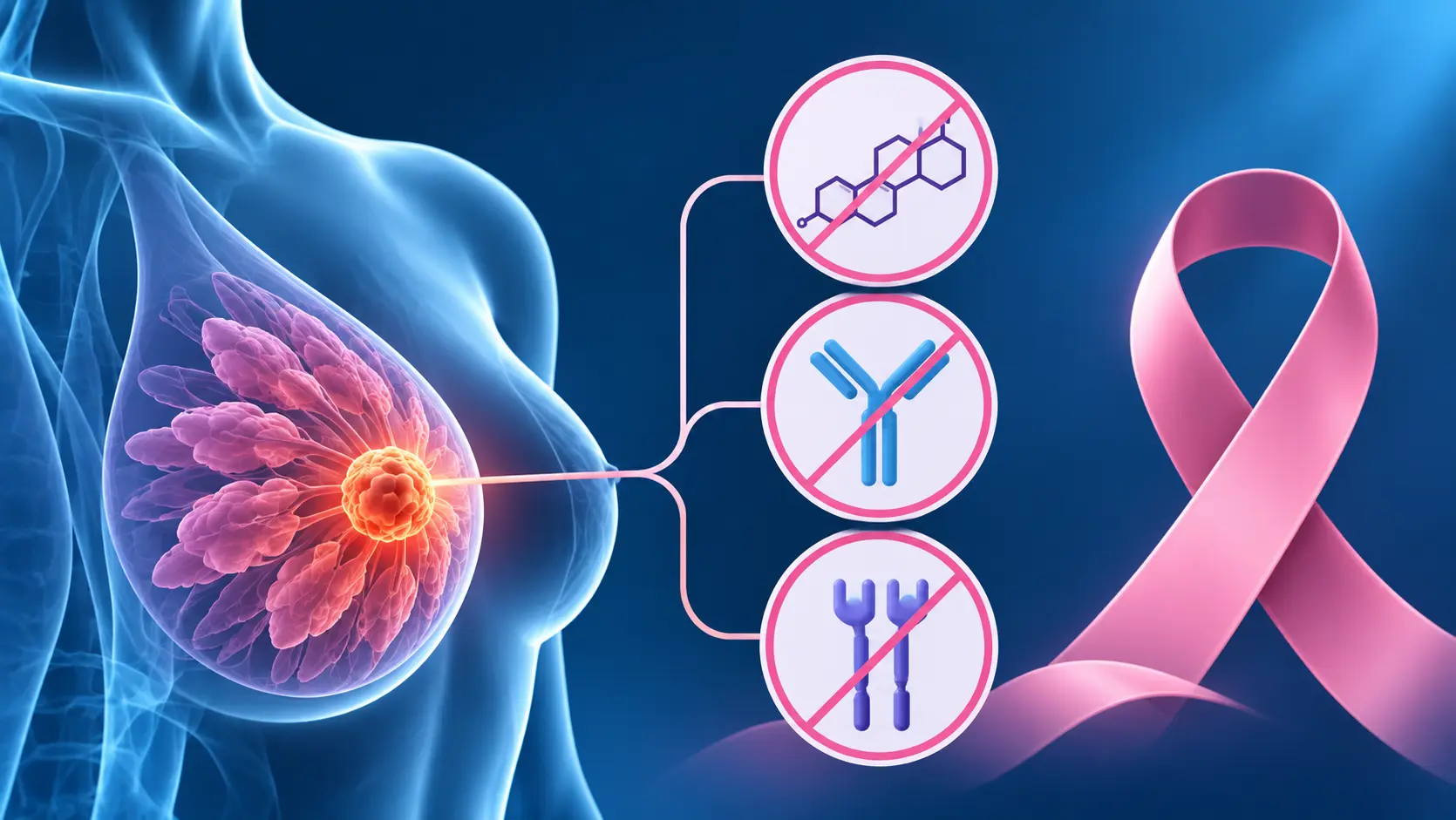
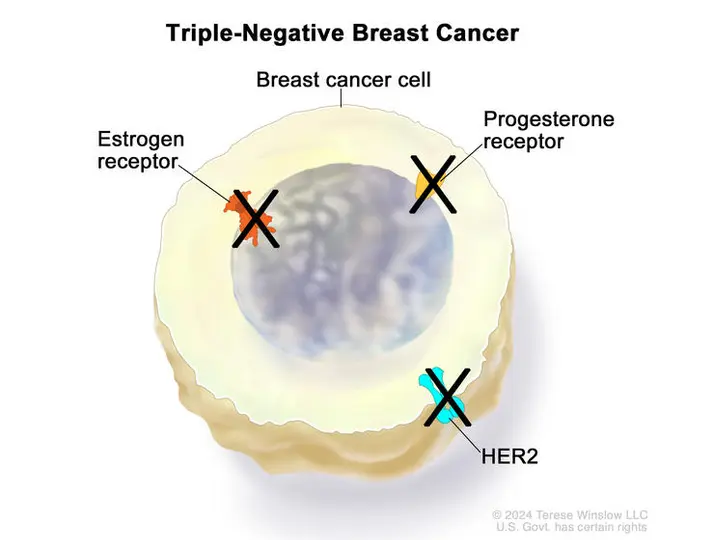
Triple-negative breast cancer (TNBC) is a type of breast cancer where tests show that three markers are absent: estrogen receptors (ER), progesterone receptors (PR), and HER2 protein, which makes it "triple-negative".
Doctors check these three markers by testing a sample of the breast cancer tissue. The results help them understand the type of cancer and choose the right treatment.
Estrogen receptor (ER) tells us whether cancer cells can respond to estrogen, a hormone that can help some breast cancers grow.
Progesterone receptor (PR) tells us whether cancer cells can respond to progesterone, another hormone that can encourage breast cancer growth.
HER2 is a protein that helps control cell growth. Higher-than-normal levels of this protein can cause some breast cancer cells to grow faster.
Since TNBC does not have these three markers, hormone therapy and HER2-targeted treatments do not work against it. Instead, doctors may recommend chemotherapy, immunotherapy or surgery, depending on the cancer stage and test results.
Why Is Triple-Negative Breast Cancer Difficult to Treat?
Triple-negative breast cancer can be harder to treat because it won't respond to hormone therapy or HER2targeted drugs.
It also is more likely to grow and spread more quickly than some other types of breast cancer. This may increase the chance of the cancer coming back, especially in the first few years after treatment.
But some cancers, like TNBC, respond well to chemotherapy. Several newer treatments, such as targeted drugs and immunotherapy, have expanded the available options for many patients.
What Are the Treatment Options for Triple-Negative Breast Cancer?
Treatment depends on the cancer stage, tumour size, whether it has spread to nearby lymph nodes and the patient's overall health.
Doctors may recommend one or a combination of the following treatments.
1. Chemotherapy for Triple-Negative Breast Cancer
Chemotherapy uses medicines to kill cancer cells or to stop them from growing and dividing.
It is one of the main treatments for triple-negative breast cancer because TNBC does not have the hormone receptors or HER2 protein that some other breast cancer treatments target.
Chemotherapy may be given at different stages of treatment:
Before surgery (neoadjuvant chemotherapy): It helps shrink the tumour, making it easier to remove during surgery.
After surgery (adjuvant chemotherapy): It helps destroy any cancer cells that may remain after surgery and lowers the chances of cancer coming back.
Doctors may use a combination of chemotherapy medicines, such as anthracyclines, taxanes or platinum-based drugs, depending on the patient's condition and treatment plan.
2. Immunotherapy for Triple-Negative Breast Cancer
Immunotherapy helps the body's immune system find and fight cancer cells.
Pembrolizumab is one immunotherapy medicine used to treat some patients with TNBC. It works by blocking a protein called PD-1, which can stop immune cells from attacking cancer cells.
For some patients with early-stage TNBC, doctors may give pembrolizumab along with chemotherapy before surgery and continue it after surgery.
For patients with advanced or metastatic TNBC, doctors may also recommend immunotherapy along with chemotherapy. A test called PD-L1 helps doctors decide if this treatment is suitable.
Immunotherapy is not suitable for everyone. Doctors consider the cancer stage, test results and the patient's overall health before recommending it.
3. Surgery
Surgery is used to remove cancer from the breast. The type of surgery depends on the tumour's size, location and whether the cancer has spread.
The two main types of surgery are:
Lumpectomy: Removes the tumour along with a small amount of surrounding healthy tissue. Most of the breast is preserved.
Mastectomy: Removes the entire breast. Nearby lymph nodes may also be checked or removed if needed.
Some patients receive chemotherapy before surgery to shrink the tumour. Others may undergo surgery first, followed by additional treatment depending on their condition.
4. Radiation Therapy
Radiation therapy uses high-energy rays to destroy cancer cells in a specific area of the body.
Doctors may recommend it after surgery to destroy any cancer cells that may be left in the breast or nearby lymph nodes.
If the cancer has spread to other parts of the body, radiation therapy may also help relieve symptoms such as pain.
5. Targeted Therapy
Targeted therapy uses medicines that act on specific changes in cancer cells or genes that help them grow.
Some patients with TNBC have inherited changes in the BRCA1 or BRCA2 genes. These genes normally help repair damaged DNA. When they have certain harmful changes, cancer cells may become more sensitive to medicines called PARP inhibitors.
Olaparib
is one such medicine. It may be recommended for eligible patients with high-risk, HER2-negative breast cancer who have an inherited BRCA1 or BRCA2 mutation.
Genetic testing helps doctors identify patients who may benefit from this treatment.
6. Antibody-Drug Conjugates
Antibody-drug conjugates are medicines that combine an antibody with a chemotherapy drug.
The antibody helps the medicine attach to specific proteins on cancer cells and deliver the chemotherapy drug to them.
Sacituzumab govitecan is one antibody-drug conjugate used for certain patients with advanced or metastatic TNBC. Other antibody-drug conjugates may be considered in selected cases depending on the tumour's test results and previous treatment.
How Is Triple-Negative Breast Cancer Treated at Different Stages?
The treatment approach changes depending on how far the cancer has spread.
Stage I Triple-Negative Breast Cancer
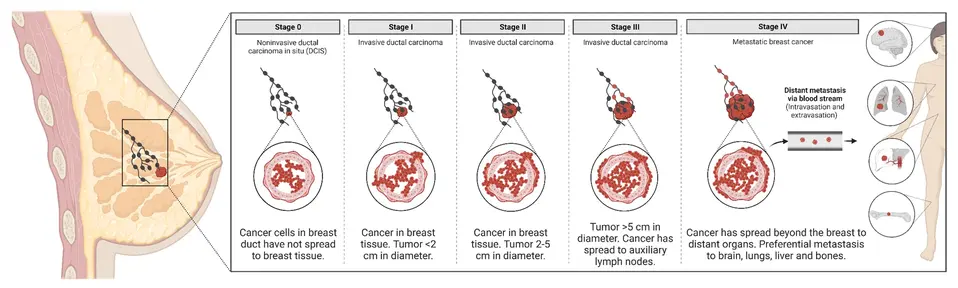
Stage I TNBC is an early stage in which the tumour is small and has not spread extensively.
Treatment may include:
Surgery to remove the tumour.
Chemotherapy before or after surgery, depending on tumour size and other risk factors.
Radiation therapy after breast-conserving surgery or in selected cases after mastectomy.
The treatment plan depends on the tumour size, lymph node findings and other medical factors.
Stage II and Stage III Triple-Negative Breast Cancer
At these stages, the tumour may be larger or may have spread to nearby lymph nodes.
Doctors often recommend chemotherapy before surgery to shrink the tumour. For eligible patients with high-risk early-stage TNBC, pembrolizumab may be added to chemotherapy and continued after surgery.
Surgery may involve a lumpectomy or mastectomy, depending on the tumour and response to treatment. Radiation therapy may also be recommended.
If cancer cells remain after chemotherapy and surgery, doctors may consider additional treatment, such as capecitabine. Patients with certain inherited BRCA mutations may also be eligible for olaparib.
Stage IV Triple-Negative Breast Cancer
Stage IV TNBC, also called metastatic TNBC, means the cancer has spread from the breast to other parts of the body, such as the bones, lungs, liver or brain.
At this stage, treatment aims to control the cancer, slow its growth, relieve symptoms and help the patient maintain a good quality of life.
Treatment options may include:
Chemotherapy: To destroy cancer cells and slow their growth.
Immunotherapy with chemotherapy: For patients who are eligible for this treatment.
Targeted therapy: Medicines such as PARP inhibitors may be used for patients with certain inherited genetic changes.
Antibody-drug conjugates: Medicines that deliver chemotherapy directly to cancer cells.
Radiation therapy: To relieve symptoms such as pain when cancer has spread to other parts of the body.
Doctors choose the treatment based on previous treatments, PD-L1 test results, genetic test results and the patient's overall health.
What Is the New Treatment for Triple-Negative Breast Cancer?
Treatment options for TNBC are still improving. Researchers are studying new medicines and combinations to find better ways to treat the disease.
Some newer treatment approaches include:
Immunotherapy combinations: Researchers are studying how immunotherapy can be combined with chemotherapy and other medicines to improve treatment outcomes.
Antibody-drug conjugates: These medicines deliver chemotherapy directly to cancer cells. They are creating more treatment options for patients with advanced TNBC.
PARP inhibitors: Medicines such as olaparib may help treat TNBC in patients with certain inherited BRCA1 or BRCA2 mutations.
Clinical trials: Patients may be able to access new treatments that are still being studied through clinical trials.
Not every new treatment is suitable or available for every patient. Doctors can explain which options are approved, available and appropriate for an individual's condition.
What Is the Prognosis for Triple-Negative Breast Cancer?
The prognosis for triple-negative breast cancer (TNBC) depends on several factors, including:
The stage of cancer at diagnosis.
The size and grade of the tumour.
Whether the cancer has spread to other parts of the body.
How well the cancer responds to treatment.
The patient's overall health.
TNBC can grow and spread faster than some other types of breast cancer. However, many patients with early-stage TNBC respond well to treatment and may achieve long-term remission.
If no cancer cells are found in the breast or nearby lymph nodes after treatment given before surgery, it is called a pathological complete response (pCR). This is generally associated with a better prognosis.
What Is the Survival Rate for Triple-Negative Breast Cancer?
The survival rate for triple-negative breast cancer (TNBC) depends on the stage of cancer at diagnosis and how well it responds to treatment.
Survival rates are based on groups of patients and cannot predict how long an individual patient may live.
Patients diagnosed with early-stage TNBC generally have better survival outcomes than those whose cancer has spread to distant organs. Newer treatments, such as immunotherapy and targeted medicines, are also providing more treatment options for some patients.
An oncologist can help explain how survival statistics relate to a patient's condition and treatment response.
Frequently Asked Questions About Triple-Negative Breast Cancer Treatment
What Is the Best Treatment for Triple-Negative Breast Cancer?
There is no single treatment that works best for every patient with TNBC. Doctors choose the treatment based on the cancer stage, tumour characteristics and the patient's overall health.
Treatment may include chemotherapy, immunotherapy, surgery or radiation therapy. Some patients may receive a combination of chemotherapy and immunotherapy before surgery to shrink the tumour.
What Is the Stage 4 Triple-Negative Breast Cancer Survival Rate?
The survival rate for stage 4 triple-negative breast cancer varies from person to person. It depends on where the cancer has spread, how well it responds to treatment and the patient's overall health.
Although stage 4 TNBC is generally not curable, treatment can help slow cancer growth, relieve symptoms and improve quality of life. Some patients respond well to treatment and may live for several years.
Can Triple-Negative Breast Cancer Be Cured?
Triple-negative breast cancer can respond well to treatment, especially when diagnosed at an early stage. Some patients may achieve long-term remission after treatment.
However, treatment outcomes depend on the cancer stage, how well it responds to treatment and the patient's overall health. In advanced TNBC, treatment mainly focuses on controlling cancer growth, managing symptoms and improving quality of life.
What Are the Symptoms of Triple-Negative Breast Cancer?
The symptoms of triple-negative breast cancer (TNBC) are similar to those of other breast cancers. Common signs may include:
A lump or thick area in the breast.
Changes in the size or shape of the breast.
Skin changes, such as dimpling or redness.
Changes in the nipple or unusual discharge.
A lump or swelling under the arm.
These symptoms do not always mean cancer. However, any new or unusual changes in the breast should be checked by a doctor.
Does Triple-Negative Breast Cancer Come Back After Treatment?
Yes. TNBC can return after treatment. Recurrence may occur in the breast, nearby lymph nodes or distant parts of the body.
The risk depends on the cancer stage, tumour characteristics and response to treatment. Regular follow-up appointments help doctors monitor for signs of recurrence.
Is Immunotherapy Effective for Triple-Negative Breast Cancer?
Immunotherapy may help treat TNBC in certain patients. Pembrolizumab is given along with chemotherapy to eligible patients with high-risk early-stage or advanced TNBC.
However, this treatment may not work for everyone. Doctors consider the cancer stage, PD-L1 test results and the patient's overall health before recommending it.
Why Is Genetic Testing Important for Triple-Negative Breast Cancer?
Genetic testing checks for inherited changes in genes such as BRCA1 and BRCA2. These changes can increase the risk of breast cancer and help doctors choose the right treatment.
Patients with certain BRCA changes may benefit from medicines such as olaparib. Genetic counselling helps patients understand their test results and whether these changes may affect their family members.
Which Is the Best Hospital for Triple-Negative Breast Cancer Treatment?
The right hospital should have an experienced breast cancer team, access to the necessary diagnostic tests and a range of treatment options.
Look for a centre where breast surgeons, medical oncologists, radiation oncologists, radiologists and pathologists work together to plan treatment. Access to genetic testing, immunotherapy and clinical trials may also be helpful.
In India, ICTC (Indian Cancer Treatment Centre) is one of the centres providing cancer care and treatment. Its services include chemotherapy, immunotherapy, targeted therapy and radiation therapy. Patients exploring treatment options can learn more about the services available at ICTC and other cancer care centres before making a decision.
This article is intended for general information and does not replace medical advice or a consultation with a qualified oncologist.