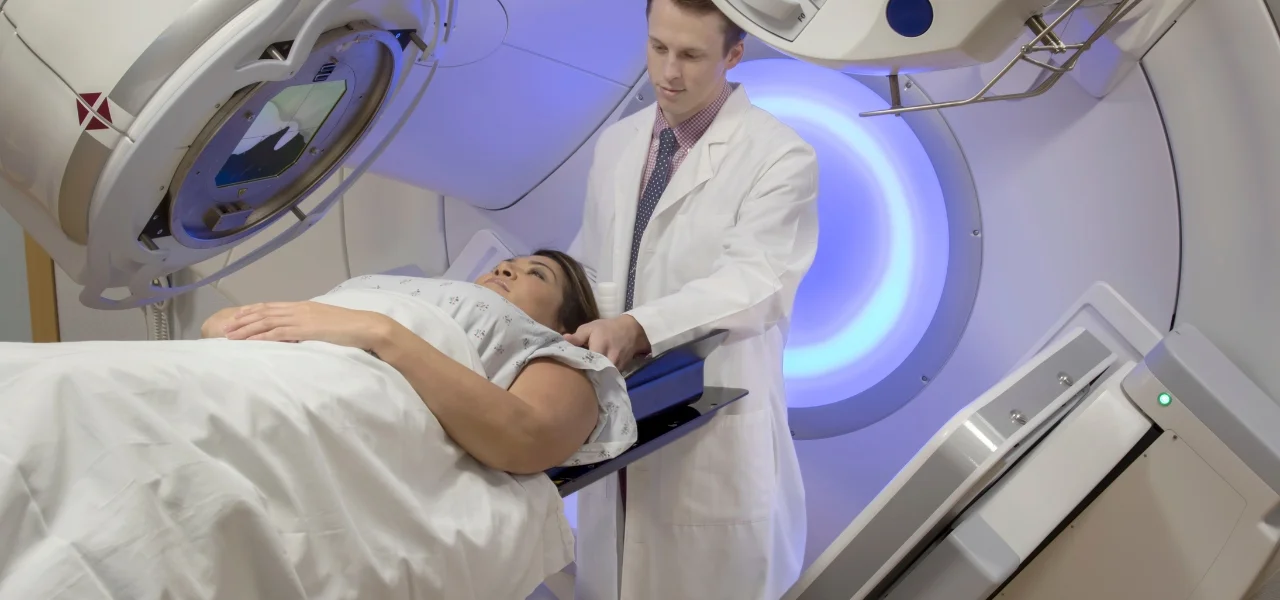
Radiation Oncology
Radiation oncology is a core cancer treatment specialty that uses high-energy radiation to destroy cancer cells and shrink tumors. Radiation therapy is a highly targeted treatment that damages the DNA of cancer cells, preventing them from growing and dividing. It may be used alone or in combination with surgery, chemotherapy, immunotherapy, or targeted therapy for effective cancer control.

Overview
Radiation therapy uses precisely controlled high-energy beams.
It targets cancer cells while sparing surrounding healthy tissue.
Radiation oncology plays a role in both curative and palliative treatment.
Advanced technologies allow accurate tumor targeting.
Treatment plans are personalized for each patient.
Role Of Radiation Oncologist
Evaluates patients to determine suitability for radiation therapy.
Designs individualized radiation treatment plans.
Determines radiation dose and treatment schedule.
Monitors patient response and side effects.
Coordinates care with medical and surgical oncology teams.
Types Of Radiation Therapy
External Beam Radiation Therapy
Radiation delivered from outside the body using a machine.
Most commonly used form of radiation therapy.
Treatments are given over multiple sessions.
Brachytherapy
Radiation source placed inside or near the tumor.
Delivers high radiation doses directly to cancer cells.
Commonly used in cervical, prostate, and head and neck cancers.
Stereotactic Radiotherapy
Delivers very high doses of radiation with extreme precision.
Requires fewer treatment sessions.
Used for small, well-defined tumors.
Advanced Radiation Techniques
I M R T
Intensity-Modulated Radiation Therapy shapes radiation beams.
Reduces exposure to nearby healthy organs.
Improves treatment accuracy and safety.
I G R T
Image-Guided Radiation Therapy uses imaging before each session.
Ensures precise tumor targeting.
Adjusts for daily changes in patient positioning.
V M A T
Volumetric Modulated Arc Therapy delivers radiation in continuous arcs.
Shortens treatment time.
Maintains high precision.
Cancers Treated
Overview
Radiation oncology treats a wide range of cancers.
It may be used alone or as part of combined treatment.
Examples
Head And Neck Cancer
Breast Cancer
Prostate Cancer
Lung Cancer
Cervical Cancer
Brain Tumors
Rectal Cancer
Esophageal Cancer
Treatment Planning
Simulation And Planning
CT simulation to map tumor location.
Creation of custom immobilization devices.
Advanced software planning for dose accuracy.
Personalization
Dose and schedule based on cancer type and stage.
Consideration of surrounding healthy organs.
Multidisciplinary tumor board input.
Treatment Delivery
Process
Treatment is delivered in daily sessions called fractions.
Each session lasts only a few minutes.
Total treatment duration may span several weeks.
Patient Experience
Painless procedure.
Patient lies still during treatment.
No radiation remains in the body after external therapy.

Side Effects
Common Side Effects
Skin Redness Or Irritation
Fatigue
Hair Loss In Treated Area
Mild Swelling
Temporary Discomfort
Long Term Effects
Tissue Stiffness
Changes In Skin Texture
Rare Organ-Specific Effects
Benefits
Highly targeted cancer treatment.
Preserves surrounding healthy tissue.
Effective for both early and advanced cancers.
Can relieve pain and symptoms.
Non-invasive treatment option.
Limitations
Requires multiple treatment sessions.
Side effects depend on treated area.
Not suitable for all cancer types.
Post Treatment Care
Regular follow-up appointments.
Monitoring for delayed side effects.
Supportive care for skin and fatigue management.
Dos And Donts
Dos
Follow Radiation Schedule Strictly
Care For Treated Skin As Advised
Maintain Proper Nutrition And Rest
Report Side Effects Early
Donts
Do Not Skip Radiation Sessions
Avoid Applying Products On Treated Skin Without Advice
Do Not Ignore Persistent Symptoms