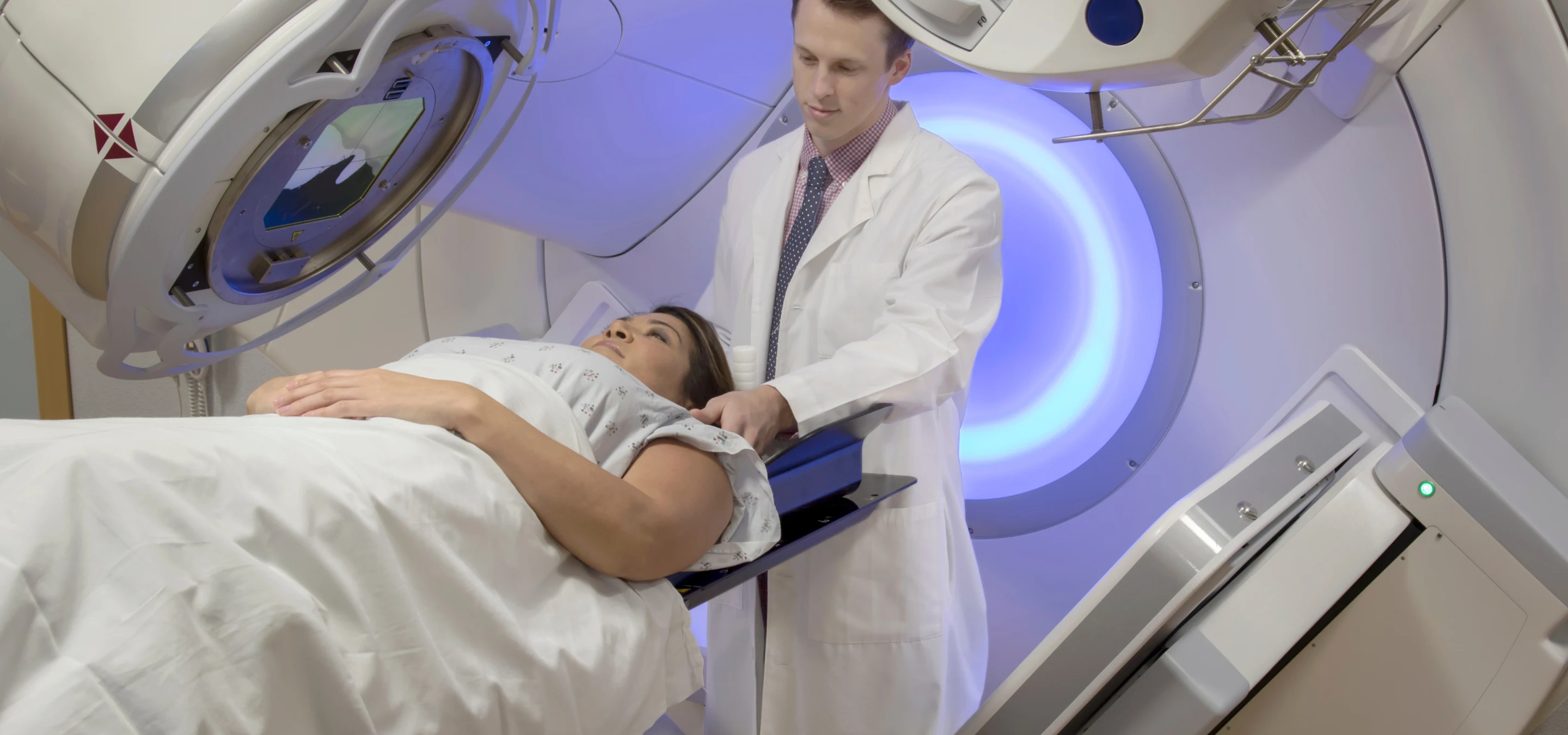
Radiation Therapy
Radiation therapy is a cancer treatment that uses high-energy radiation to destroy cancer cells or slow their growth. It works by damaging the DNA of cancer cells, preventing them from multiplying and causing them to die over time. Radiation therapy is commonly used alone or in combination with surgery, chemotherapy, targeted therapy, or immunotherapy.

Overview
Radiation therapy targets cancer cells in a specific area of the body.
Unlike chemotherapy, radiation therapy is usually a localized treatment.
It damages the genetic material of cancer cells, stopping them from dividing.
Healthy cells in the treated area may also be affected but usually recover.
Radiation therapy can be used for curative, adjuvant, neoadjuvant, or palliative purposes.
Subtypes Of Therapy
External Beam Radiation
Radiation is delivered from a machine outside the body.
Most commonly used form of radiation therapy.
Includes advanced techniques such as IMRT, IGRT, and VMAT.
Internal Radiation
Also known as brachytherapy.
Radiation sources are placed inside or near the tumor.
Commonly used for cervical, prostate, and head and neck cancers.
Systemic Radiation
Radiation is given through the bloodstream.
Used for certain cancers such as thyroid cancer or bone metastases.
Treatment Intent
Curative Therapy
Used to completely eliminate cancer.
Often combined with surgery or chemotherapy.
Adjuvant Therapy
Used after surgery to destroy remaining cancer cells.
Neoadjuvant Therapy
Used before surgery to shrink tumors.
Palliative Therapy
Used to relieve symptoms such as pain, bleeding, or obstruction.
Improves quality of life in advanced cancer.
Cancers Treated
Breast Cancer
Head And Neck Cancer
Lung Cancer
Cervical Cancer
Prostate Cancer
Brain Tumors
Gastrointestinal Cancers
Bone Metastases And Soft Tissue Tumors
Benefits
Effectively kills or controls cancer cells in a targeted area.
Can preserve organs and avoid major surgery in some cases.
Relieves pain and other symptoms caused by tumors.
Can be safely combined with other cancer treatments.
Non-invasive and usually painless during treatment.
Downsides
May cause side effects in nearby healthy tissues.
Requires multiple hospital visits over several weeks.
Side effects may appear gradually during treatment.
Not suitable for all cancers or all stages.
Methods Of Administration
External Radiation
Delivered using linear accelerator machines.
Each session lasts only a few minutes.
Treatment is usually given five days a week over several weeks.
Brachytherapy
Radiation sources placed temporarily or permanently inside the body.
Allows high doses of radiation directly to the tumor with minimal exposure to nearby tissues.
Systemic Radiation
Radioactive substances given orally or intravenously.
Used in specific cancers such as thyroid cancer.

Side Effects
Common Side Effects
Fatigue
Skin Redness Or Irritation In Treated Area
Hair Loss In The Treated Area
Loss Of Appetite
Nausea
Site Specific Side Effects
Mouth Sores And Difficulty Swallowing (Head And Neck Radiation)
Diarrhea Or Abdominal Cramps (Abdominal Radiation)
Breathlessness Or Cough (Chest Radiation)
Urinary Or Bowel Changes (Pelvic Radiation)
Additional Notes
Side effects depend on the treatment area and radiation dose.
Most side effects are temporary and improve after treatment.
Precautions
Follow skin care instructions provided by the radiation team.
Avoid applying creams or powders on the treated area without medical advice.
Protect treated skin from sun exposure.
Maintain good nutrition and hydration.
Inform the care team about any discomfort or new symptoms.
Post Treatment Care
Regular follow-up visits to monitor recovery and response.
Skin and tissue healing may continue for weeks after treatment.
Long-term monitoring for late side effects is important.
Rehabilitation and supportive care may be advised based on treatment area.
Dos And Donts
Dos
Get Adequate Rest
Eat A Balanced And Nutritious Diet
Drink Plenty Of Fluids
Attend All Scheduled Radiation Sessions
Donts
Do Not Skip Treatment Sessions Without Informing Your Doctor
Avoid Scratching Or Rubbing Treated Skin
Avoid Smoking And Alcohol During Treatment
Do Not Use Unapproved Skin Products On Treated Areas