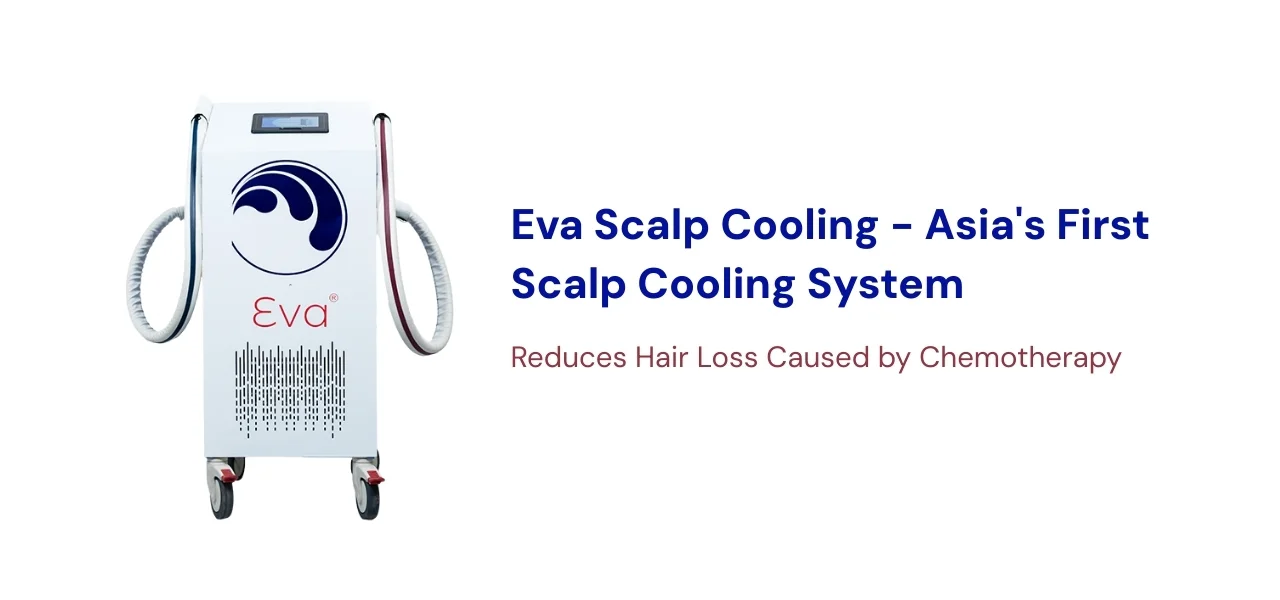
Scalp Cooling (Anti Hairfall)
Scalp cooling is an advanced supportive care technique used during chemotherapy to reduce hair loss. It works by lowering the temperature of the scalp, which reduces blood flow to hair follicles and limits the amount of chemotherapy drugs reaching them. This helps preserve hair and improves emotional well-being during cancer treatment.

Overview
Hair loss is a common and distressing side effect of chemotherapy.
Scalp cooling is used before, during, and after chemotherapy sessions.
It helps protect hair follicles from chemotherapy damage.
The effectiveness depends on chemotherapy type and dosage.
Scalp cooling improves patient confidence and quality of life.
How It Works
Mechanism
Cooling causes blood vessels in the scalp to constrict.
Reduced blood flow limits chemotherapy exposure to hair follicles.
Lower scalp temperature slows follicle cell activity.
Together, these effects reduce chemotherapy-induced hair loss.
Timing
Cooling starts before chemotherapy begins.
Continues during drug administration.
Extended for a period after chemotherapy completion.
Types Of Scalp Cooling
Manual Cold Caps
Gel-filled caps pre-cooled in specialized freezers.
Caps are changed at regular intervals to maintain temperature.
Requires trained staff for proper use.
Automated Scalp Cooling Systems
Computer-controlled cooling devices.
Maintain consistent scalp temperature throughout treatment.
More comfortable and widely used in modern oncology centers.
Patients Who May Benefit
Overview
Scalp cooling is suitable for many patients receiving chemotherapy.
Best results are seen in certain cancer types and drug regimens.
Examples
Breast Cancer Patients
Ovarian Cancer Patients
Patients Receiving Taxane-Based Chemotherapy
Patients Receiving Anthracycline-Based Regimens (Selective Use)
Benefits
Significantly reduces chemotherapy-related hair loss.
Helps patients maintain their appearance and self-esteem.
Improves emotional and psychological well-being.
Allows patients to continue social and professional activities with confidence.
Non-invasive and safe when properly supervised.
Limitations
Does not guarantee complete hair preservation.
Effectiveness varies based on chemotherapy drugs used.
May not be suitable for all cancer types.
Requires additional time before and after chemotherapy sessions.
Procedure Details
Preparation
Hair should be clean and free of styling products.
Patients are advised to avoid hair coloring during treatment.
Medical team evaluates suitability before starting scalp cooling.
During Treatment
Cooling cap is fitted securely to the scalp.
Temperature is gradually reduced for patient comfort.
Continuous monitoring ensures safety and effectiveness.
After Treatment
Cooling continues for a set time after chemotherapy.
Cap is removed once scalp temperature normalizes.

Side Effects
Common Side Effects
Cold Sensation On The Scalp
Headache Or Mild Discomfort
Scalp Tightness
Chills During Initial Cooling
Additional Notes
Most side effects are temporary and manageable.
Discomfort usually decreases after the first few sessions.
Safety Considerations
Scalp cooling is not recommended in certain blood cancers.
Careful monitoring is required for patients with cold sensitivity.
Oncologist approval is necessary before starting scalp cooling.
Post Treatment Care
Use mild, sulfate-free shampoos.
Avoid excessive heat styling and tight hairstyles.
Handle hair gently to reduce breakage.
Continue gentle hair care for several weeks after chemotherapy.
Dos And Donts
Dos
Follow Scalp Cooling Schedule As Advised
Use Gentle Hair Care Products
Protect Hair From Sun And Heat
Report Any Discomfort To Medical Staff
Donts
Do Not Use Hair Dryers Or Straighteners Frequently
Avoid Chemical Hair Treatments
Do Not Skip Cooling Sessions Without Medical Advice